
Meihuaquan - The Plum Blossom Fist
- Grant Mundy

- Oct 3, 2021
- 5 min read
One of the FIVE Internal Styles we practice at Wu Xing Dao Kung Fu, learn more about this fascinating art that can heal and strengthen your internal organs, and double energy levels!

Meihuaquan - The Plum Blossom Fist is an ancient Chinese Martial Art, which can be traced back as far as the Shang Dynasty (1600BC- 1046BC).
According to legend, its boxing technique is based upon the Kunlun school and comes from "Buddhist sect and Daoist institutions".
For thousands of years Meihuaquan has been practiced as a secret fighting style, in small, closely guarded organisations, preserving the inner unity.
Meihuaquan is a system that has incorporated fine traditions as well as impressive skills, as demonstrated by Masters of the style, over centuries of development and refinement.
Knowledge has been handed down to modern day generations as well, and training at a good school of Internal Martial Arts is often defined by its family like atmosphere, where experts of different levels regularly aid each other to improve their skills.
What are the training techniques of Meihuaquan?

The training techniques of Meihuaquan are extensive and effective.
The research of Meihuaquan includes two components: the theoretic field and the martial field.
The concept originated from ancient scriptures and records, which have been passed on from generation to generation, usually from father to son.
It is aligned with the essence of Daoist, Buddhist and Confucian teachings, and the principles outlined in the Yi Jing, the "Book of Changes".
The knowledge and structure of this technique is based on the philosophical scriptures that focus on wholeness and harmony in a person’s raw essence (jing), internal energy (Qi) and spirit (shen).
The martial field of Meihuaquan develops a practitioner’s physical ability, and teaches the theory of self defence and fighting techniques.
The Martial skills learned in Meihuaquan are:
1. Structure (jia zi)
2. Footwork in eight directions (ba feng)
3. Duel-training boxing (cheng quan)
4. Winning boxing (yang quan)
5. Weapons
6. Qigong
JIA ZI is the practice of basic Kung fu techniques in Meihuaquan, as well as footwork.
The five basic stances are called 'Stake Stances', and need to be stationary, with each position to be performed motionless, for a total of 3-5 breaths, thus developing strength as well as Qi in the entire body.
The Stake Stances (zhuang bu) are left-right symmetrical positions and are called:
1. Da Shi (Big Stance)

2. Shun Shi (Fluent Stance)

3. Ao Shi (Twisted Stance)

4. Xiao Shi (Little Stance)

5. Bai Shi (Failing, or Falling Stance)

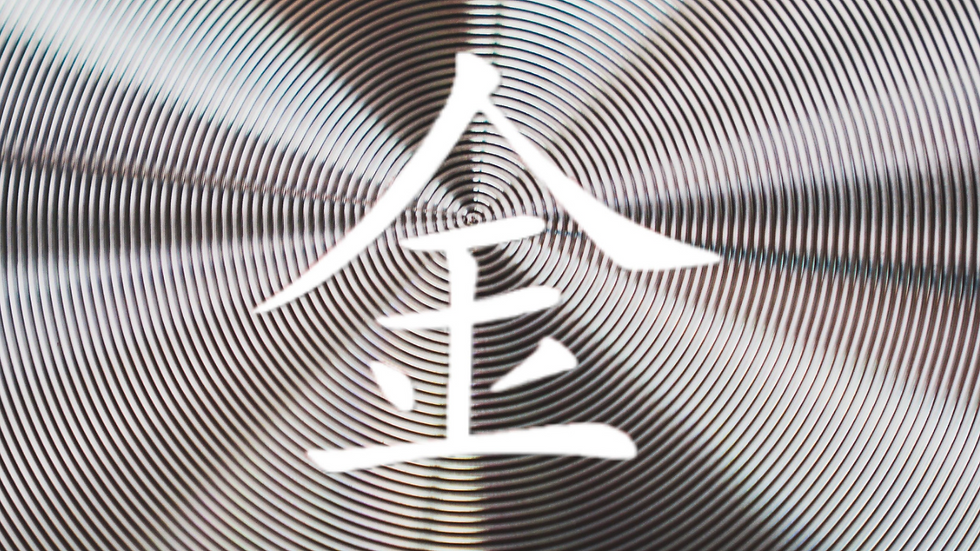
These five stances are based on the Five Element theory of generation, and also restriction of those elements, in addition to Yin-Yang theory:
1. Metal
2. Water

3. Wood

4. Fire

5. Earth


The stake postures must stay as motionless as a mountain, alternating the energy of Yin and Yang, whilst the moving steps should flow like the waves of a river, in an endless stream.
The moving steps (xing bu) are dynamic, and need to be swift, accurate, light and continuous.
Si Men (4 Doors) is a standard pattern of the Jia zi, and also contains eight directions, according to the 4 cardinal points, and the intermediate directions.
The five stances performed in each of these directions, and the resulting pattern resembles a plum blossom in full bloom.
The static and also the vibrant elements of Jia zi have a matching synchronised effect on the internal body organs, the external body, and the flow of the Qi.
BA FENG is footwork technique that is unique to Meihuaquan.
There are 3 types of footwork in Meihua practice and teach a way of maneuvering make it possible for the practitioner to rapidly move in every direction, advance or retreat, strike or protect.
The primary training approach for Meihuaquan footwork consists of:
1. Bai fa (Swinging Method)
2. Che fa (Retreating Method)
3. Zha fa (Stabbing Method)
Simply put these three types of moving steps are really helpful footwork drills, designed to create the capacity to close distance, advance and retreat in all directions, to twist one's upper and lower body quickly, to swiftly look left or right, and remain nimble even during intense altercations.
In function, these three methods enable the Martial Artist to move like the wind, stand strong like a mountain, and rapidly change from a high fighting stance to a low fighting stance, as well as retreat immediately after attacking.
CHENG QUAN: (Dual - Training boxing) is a matching practice designed to incorporate the techniques of Meihuaquan for combat.
These activities are designated to the 8 directions of the four doors (Si Men) and connected by relocating moving steps and Ba feng steps.
In Cheng quan boxing, there are combat training regimens comparable to actual combat, including methods such as striking, grappling, seizing, escaping and wrestling.
With dedicated practice of Cheng quan training, the practitioner can accurately gauge the strength of an opponent, redirect the strength of their opponent, and also estimate the skill level of the challenger.
In this way, a practitioner can acquire an instinctive ability and intuition for fighting.
YING QUAN: (Winning Boxing) is real sparring practice.
At this level, two experts do not comply with set movements or drills, instead applying their understanding of the fundamentals of Meihuaquan quickly and decisively, in order to gain the advantage in combat.
QIGONG: (Internal Energy Cultivation)

In addition to the Martial aspects of Meihua practice which include fighting and weapons, which stimulate the internal organs as well as the external muscles, tendons and ligaments at the same time, Meihuaquan also consists of unique Qigong training methods called Neidan (internal elixir) and also Waidan (external elixir).
When the external body is developed to a high level, and the internal energy (Qi) and spirit (Shen) are well coordinated, Neidan is formed.
Meihuaquan Qigong contains approaches concerning the generation and also circulation of Qi, such as "Small Circulation", also known as the “Microcosmic Orbit”, "Eight Pieces of Brocade", and the "Muscle Tendon Changing Classic".
It likewise has many techniques on how to enhance focus, conduct "Qi", control breathing, and help clear the mind of random thoughts. All are superb methods to educate the mind, increase awareness of Qi, and also the raise the spirit.
STAKE STANDING PRACTICE (Zhuang gong):

In ancient times, Meihuaquan was practiced on the top of stakes that were driven into the ground. The stakes are divided into 3 levels representing the practitioner's skill level:
1. Low
2. Middle
3. High
The advantages of exercising over the risks are countless: balance of the body, deep sinking right into the positions, enhancing the strength and also Qi of the whole body, natural acupressure on the soles of the feet, detoxification etc.
Meihuaquan is a deep and profound Martial Art, that has a history nearly four thousand years in the making. At Wu Xing Dao Kung Fu, we are keeping the spirit and traditions of this amazing Martial Art alive and sharing the training methods with the next generation of Kung Fu practitioners.

Comments